

Why would you need a choke valve?

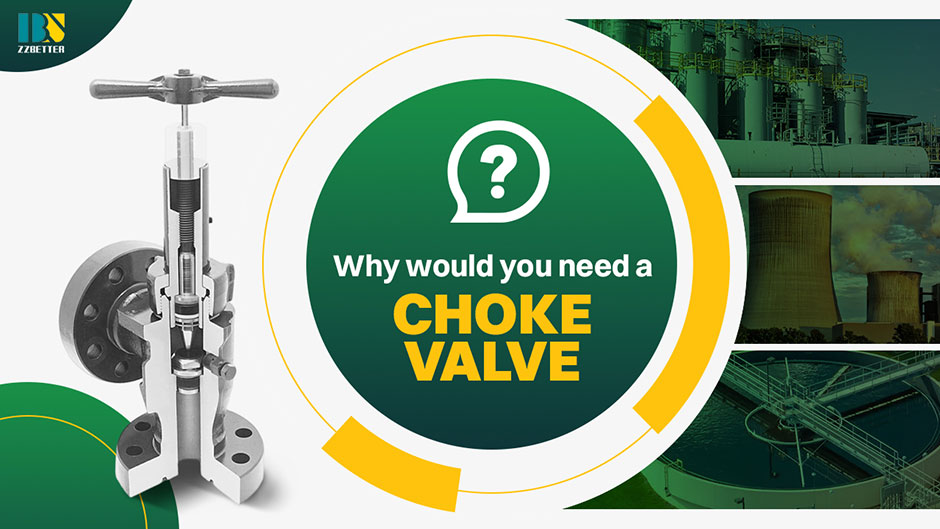
There has high pressure coming out of your faucet and you need to reduce that pressure so you don’t waste any water or put undue strain on the infrastructure helping to transmit it. Or maybe you just want to hit that perfect sweet spot of pressure for washing your hands.
To achieve this, we must create a pressure drop or restriction. This will speed up the fluid, which if it’s oil or gas being extracted from the ground, normally has particles in it. So we need to control this process, in order to mitigate the risk of these particles — most commonly sand in energy producing applications — from causing damage to the piping infrastructure. Or maybe there’s a specific amount of production that we need to achieve for a given process.
Each of these requirements, when we open the valve to meet them, will, in most cases, bleed down the upstream pressure and may require further adjustments to meet a specific application goal. This is where the control a choke valve provides is extremely beneficial and it is the control it enables that serves as the main purpose behind having such a valve in the first place.
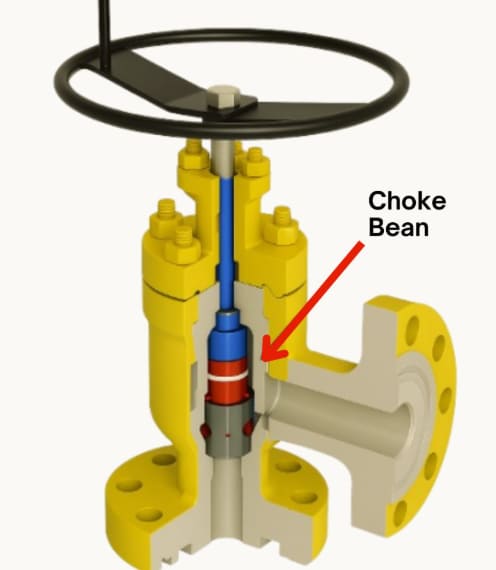
Below are the key reasons for using a choke valve:
1. Precise Flow Rate Regulation
Many industrial processes require strict control over fluid (liquid or gas) flow rates to ensure efficiency, product quality, or process stability. For example:
- In oil and gas production, well fluids (crude oil, natural gas) must be regulated to match downstream processing capacity—too high a flow rate can overwhelm separators or pipelines, while too low wastes reservoir potential.
- In chemical plants, raw materials and intermediates need calibrated flow to maintain reaction conditions (e.g., temperature, concentration) during mixing or polymerization.
Choke valves achieve this by creating a controllable restriction (via an orifice), allowing operators to fine-tune flow rates to exact specifications—whether through manual adjustment or automated control systems.
2. Pressure Management & Surge Prevention
Fluids in industrial systems (especially oil and gas, power generation) often flow at extreme pressures. Choke valves play two key pressure-related roles:
-Pressure Reduction: When fluid moves from a high-pressure source (e.g., an oil reservoir with 10,000+ psi) to a low-pressure downstream system (e.g., a processing facility at 500 psi), the valve’s restriction creates a controlled pressure drop. This prevents sudden pressure surges that could rupture pipelines, damage equipment, or pose safety hazards.
- Backpressure Control: In some applications (e.g., wellhead production), maintaining a minimum backpressure is critical to prevent reservoir damage or unstable flow. Choke valves adjust restriction to keep upstream pressure within safe limits.
3. Adaptability to Variable Operational Conditions
Industrial processes rarely operate under static conditions—reservoir pressure declines over time, power plant loads fluctuate, and chemical feedstock properties vary. Choke valves (especially adjustable models) handle these changes dynamically:
- Adjustable choke valves can modify the orifice size in real time to compensate for declining well pressure, ensuring consistent production rates.
- In water treatment plants, they adapt to peak demand periods by increasing flow to municipal networks, then reducing it during low-usage hours.
4. Protection of Downstream Equipment
Downstream components (e.g., pumps, filters, separators, turbines) are often designed to operate within narrow flow and pressure ranges. Choke valves act as a “buffer” to protect these expensive assets:
- In wind turbines or thermal power plants, they regulate steam or coolant flow to prevent turbine overspeed or boiler damage.
- In mining operations, they control the flow of abrasive slurries to reduce wear on pumps and pipelines.
5. Handling Harsh Fluids & Environments
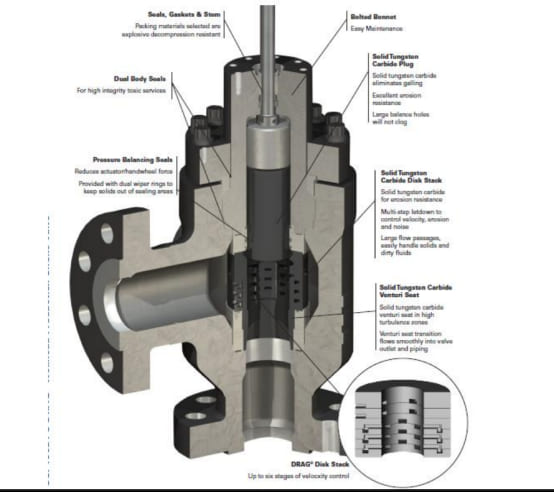
Many industrial fluids are corrosive (e.g., sulfuric acid, saltwater), abrasive (e.g., mineral slurries), or high-temperature (e.g., steam). Choke valves are engineered with durable materials (e.g., stainless steel, Hastelloy, tungsten carbide) and robust sealing systems to withstand these harsh conditions—something standard valves often cannot do without frequent failure.
6. Process Optimization & Cost Savings
By ensuring precise flow and pressure control, choke valves directly improve process efficiency and reduce costs:
- In oil and gas, optimized flow rates maximize reservoir recovery and minimize downtime from equipment failures.
- In chemical processing, consistent flow reduces product waste and rework caused by off-spec reactions.
- Automated choke valves integrate with process control systems to reduce manual intervention, lowering labor costs and human error.
Summary
Choke valves are not just “flow restrictors”—they are engineered solutions to the most demanding flow and pressure control challenges in industrial operations. Their ability to regulate flow, manage pressure, adapt to variable conditions, and protect equipment makes them essential in oil and gas, power generation, chemical processing, water treatment, and mining sectors. Without choke valves, many high-pressure, high-precision industrial processes would be unsafe, inefficient, or impossible to execute.