

How to Effectively Prevent Carbide Rotary Burr Chipping?

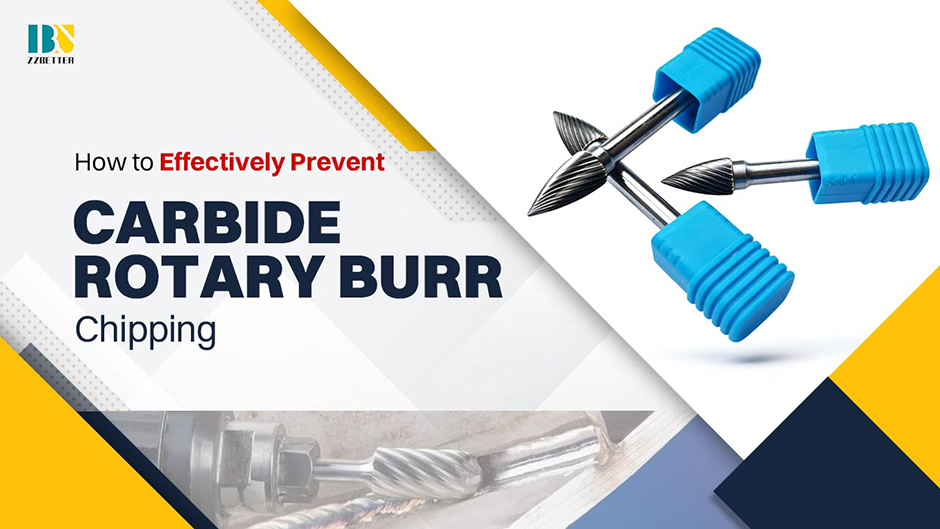
Carbide rotary burrs, known for their exceptional hardness and wear resistance, are indispensable tools for mold repair, weld seam cleaning, and complex contour shaping. However, despite their seemingly indestructible nature, the carbide head is quite brittle and highly susceptible to "chipping" if used improperly, leading to premature tool failure and increased production costs. Effectively preventing chipping hinges on understanding its root causes and implementing correct preventive measures.
I. Common Reasons for Rotary Burr Chipping
Chipping is not random; it is typically caused by the following key factors:
· Overload and Impact: This is the most common culprit. Applying excessive pressure during operation or suddenly striking the workpiece at an incorrect angle can cause the brittle carbide teeth to fail under instantaneous impact force, leading to the chipping of small particles or even large fragments.
· Incorrect Selection: Using the wrong specification. For example, using a burr with too large a tooth pitch (coarse tooth) to process hard and brittle materials (like high-carbon steel, cast iron) or deep narrow grooves can subject individual teeth to excessive load, making them highly prone to chipping.
· Improper Speed: Excessively low RPM is an invisible killer. When the speed is too low, the burr "scrapes" and "pushes" the material instead of "grinding" it, generating significant resistance and vibration. This not only reduces efficiency but also causes continuous impact leading to chipping.
· Angle and Wobble: Incorrect operating angles and excessive wobble concentrate the cutting force on only a few teeth instead of distributing the load evenly across all teeth, resulting in localized overload.
II. Preventive Strategies: Four Core Tactics to Avoid Chipping
1. Precise Selection: Matching the Tool to the Material and Application
· Choose Tooth Form by Material: When processing hard, brittle materials (e.g., hardened steel, cast iron), prioritize Fine Tooth rotary burrs. They enable a gentler cut, reducing the force per tooth. For soft, gummy materials (e.g., aluminum, copper), use Coarse Tooth burrs to prevent loading.
· Choose Shape by Contour: Select the appropriate head shape for the machining task. For example, use a spherical burr for internal radii and a cylindrical burr for square shoulders, ensuring maximum contact area and avoiding localized stress concentration.
2. Appropriate Rotation Speed and Feed Rate
· Controlling Rotation Speed: Excessively high rotation speeds can cause a rapid increase in the temperature of the rotary file, reducing its hardness and increasing the likelihood of chipping. Conversely, excessively low rotation speeds can result in excessive cutting forces, also easily leading to chipping. Therefore, adjusting the rotation speed appropriately according to specific machining conditions is crucial.
· Optimizing Feed Rate: Excessively high feed rates increase the pressure on the rotary file, raising the risk of chipping; conversely, insufficient feed rates can lead to heat buildup, affecting tool performance. Finding a balance that effectively removes material without placing excessive pressure on the rotary file is key.
3. Cultivating Good Handling Habits
· Maintain the Correct Angle: Typically, operate the burr at a 15 to 30-degree angle between its axis and the workpiece surface. This angle offers a good balance of efficiency and safety. Avoid perpendicular (90-degree) impact whenever possible.
· Use a Stable Support: Whenever possible, use a finger rest or a dedicated support fixture to stabilize the tool, reducing chatter and uncontrolled wobble for more precise and safer control.
· Keep Moving: Avoid holding the burr in one spot for an extended period. Maintain smooth, consistent movement to prevent localized overheating and excessive wear.
4. Timely Maintenance and Correct Clamping
· Secure Clamping: Ensure the burr's shank is gripped firmly (e.g., in a die grinder). Any slight run out creates vibration, exacerbating the risk of chipping.
· Regular Cleaning: Clean the teeth periodically, especially after machining soft materials, to prevent chip buildup. Clogging increases friction, heat, and load, which can indirectly cause chipping.
III. Conclusion
Preventing rotary burr chipping is essentially an exercise in managing "force." By employing correct selection, optimized speed, gentle and stable operation, and proper handling techniques, you can not only effectively prevent costly chipping but also improve processing efficiency and surface finish, significantly extending tool service life. Master these skills to maximize the value of every rotary burr you use.
We hope this article provides value. We offer a variety of high-quality carbide rotary burrs in multiple tooth forms and specifications to meet your diverse machining needs. Please contact us for more product information or technical consultation.