

Application of Carbide Rotary Burrs in Automotive Parts Machining

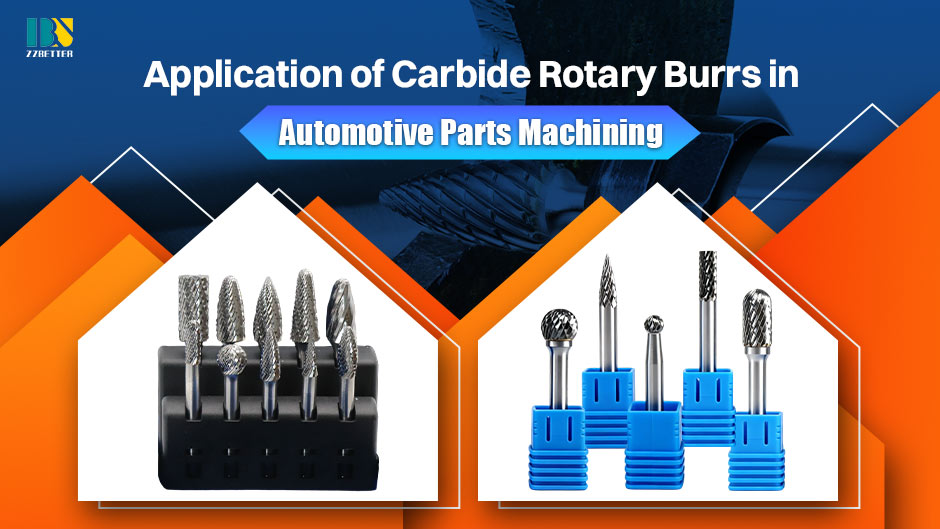 In modern automotive manufacturing, the requirements for component precision, consistency, and production efficiency are exceptionally stringent. Carbide rotary burrs, hailed as "industrial teeth," are deeply integrated into the production lines of critical components from engines to transmission systems, serving as an unsung hero in ensuring automotive quality and reliability.
I. The Versatile Craftsman: Core Applications in Automotive Parts Machining
Carbide rotary burrs play a multifaceted role in automotive manufacturing, with their core applications spanning several key areas:
Within the engine system, they are primarily used for cleaning casting flash and burrs on components like cylinder blocks and heads, finishing the complex flow channel surfaces of turbocharger impellers, and polishing deep oil passages. These precise operations significantly enhance the engine's airflow efficiency and lubrication, serving as crucial steps to ensure assembly cleanliness, smooth operation, and reliability.
In the realm of transmission systems and chassis components, rotary burrs undertake the vital tasks of removing machining burrs, performing precise chamfering, and edge-blending for parts such as gearshift levers, various drive shafts, and suspension components. This thoroughly eliminates microscopic stress concentration points on parts, preventing sharp edges from damaging seals or wiring harnesses during operation, forming the foundation for long-term vehicle safety and reliability.
Furthermore, at the source in automotive mold and casting, carbide rotary burrs are extensively used for the final finishing and polishing of cavities in casting dies and large stamping dies. Through precise treatment of the dies, the forming quality and surface finish of large body panels like doors and hoods, as well as other components, are fundamentally assured.
II. Irreplaceable Advantages: Why the Automotive Industry Prefers Them
The widespread application of carbide rotary burrs in the automotive industry stems from their significant advantages over traditional processes:
1. Exceptional Machining Capability and Efficiency: They can easily machine various metal materials with hardness up to HRC70 (including hardened steel), offering an extremely wide application range. Their machining efficiency is tens of times higher than that of hand files, and they can effectively replace small grinding wheels, avoiding dust pollution.
2. Superior Machining Quality and Economy: They can produce surfaces with high precision and fine finish, meeting the stringent requirements for fit and tolerance in automotive parts. Concurrently, their exceptionally long service life (with durability potentially ten times that of high-speed steel tools) significantly reduces the per-unit machining cost.
III. Innovation and Customization: Technological Evolution for the Future
To address the challenges posed by the increasingly complex structures and materials of automotive components, carbide rotary burrs themselves are continuously evolving:
Targeted Structural Design: For specific workpieces like engine castings, patented products employ optimized groove angles and rake angles to increase chip space, thereby improving machining efficiency and tool impact resistance. For hard-to-reach areas such as crankshaft deep holes, spherical head designs combined with special helical flutes are used to achieve precise and safe finishing.
Material and Manufacturing Upgrades: Industry leaders are adopting ultra-fine grain carbide materials and utilizing advanced five-axis CNC grinding machines for precision manufacturing. This ensures superior tool cutting performance, wear resistance, and dimensional consistency.
IV. Selection Guidelines: Recommendations for Maximizing Performance
To fully leverage the potential of carbide rotary burrs, correct selection and operation are crucial:
Selection Based on Material and Task: For machining harder materials like cast iron and steel, single-cut burrs can be chosen for better edge resistance and surface finish. For softer materials like aluminum and plastic, double-cut burrs are more suitable due to better chip evacuation and higher efficiency.
Standardized Operation for Safety: They must be operated with high-speed electric or pneumatic tools, typically at speeds ranging from thousands to tens of thousands of RPM. During operation, ensure the tool is firmly and correctly clamped, move it steadily and evenly, avoid excessive force, and always wear safety goggles.
In summary, with their multifunctionality, high efficiency, and high precision, carbide rotary burrs are deeply embedded in the core processes of automotive manufacturing. As the automotive industry continues to advance towards lightweight and high-performance goals, this precision tool will undoubtedly keep innovating, providing solid technical support for manufacturing higher-quality and more reliable vehicles.