

The Manufacturing Process of Rotary Burrs

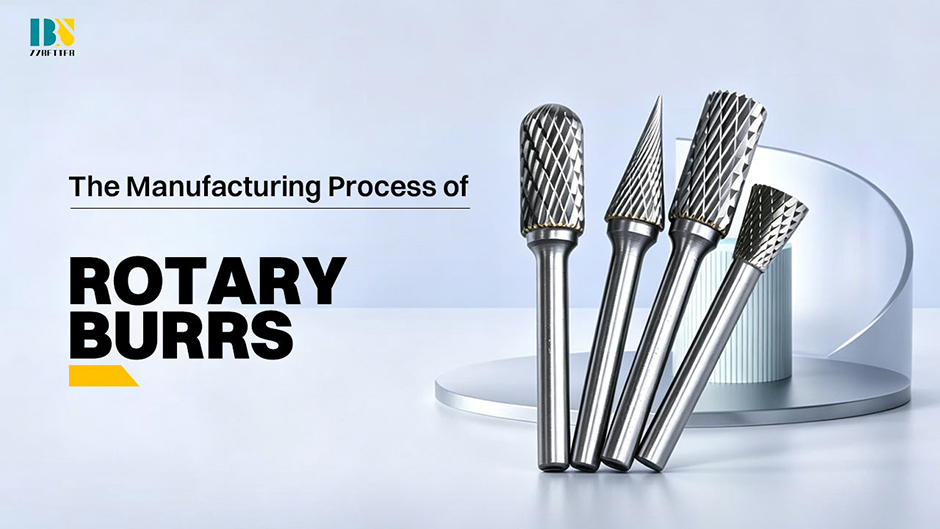
Rotary burrs, also known as high-speed grinders or carbide burs, are essential precision tools used in machining, deburring, and shaping a wide range of materials like metals, wood, plastics, and glass. Their performance hinges on three core characteristics: high hardness, exceptional wear resistance, and complex geometries. This article delves into the sophisticated manufacturing processes that bring these powerful tools to life.
1. Raw Material Selection
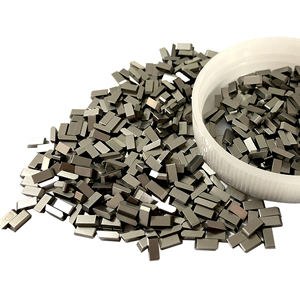
Cutting Head Material: The vast majority of rotary burrs utilize Cemented Carbide (Tungsten Carbide). This material is produced via powder metallurgy, combining ultra-hard Tungsten Carbide grains with a Cobalt (Co) binder. Different grades, varying in grain size and cobalt content, are selected to match specific applications (e.g., roughing, finishing, machining steel, cast iron, or non-ferrous metals).
2. Shank Material
For welded burrs, the shank is typically made of carbon steel (e.g., 45# steel). For premium solid carbide rotary burrs, the entire tool—head and shank is manufactured from a single piece of tungsten carbide, ensuring superior strength and balance.
3. Primary Forming and Machining Processes
There are two predominant manufacturing methods, each yielding tools with different performance characteristics.
Method 1: Sinter-Forming Process (Powder Metallurgy)
This method is typically used for standard burrs with relatively simple shapes.
1. Mixing: Tungsten Carbide and Cobalt powders are precisely mixed in a specific ratio with a pressing agent (e.g., wax).
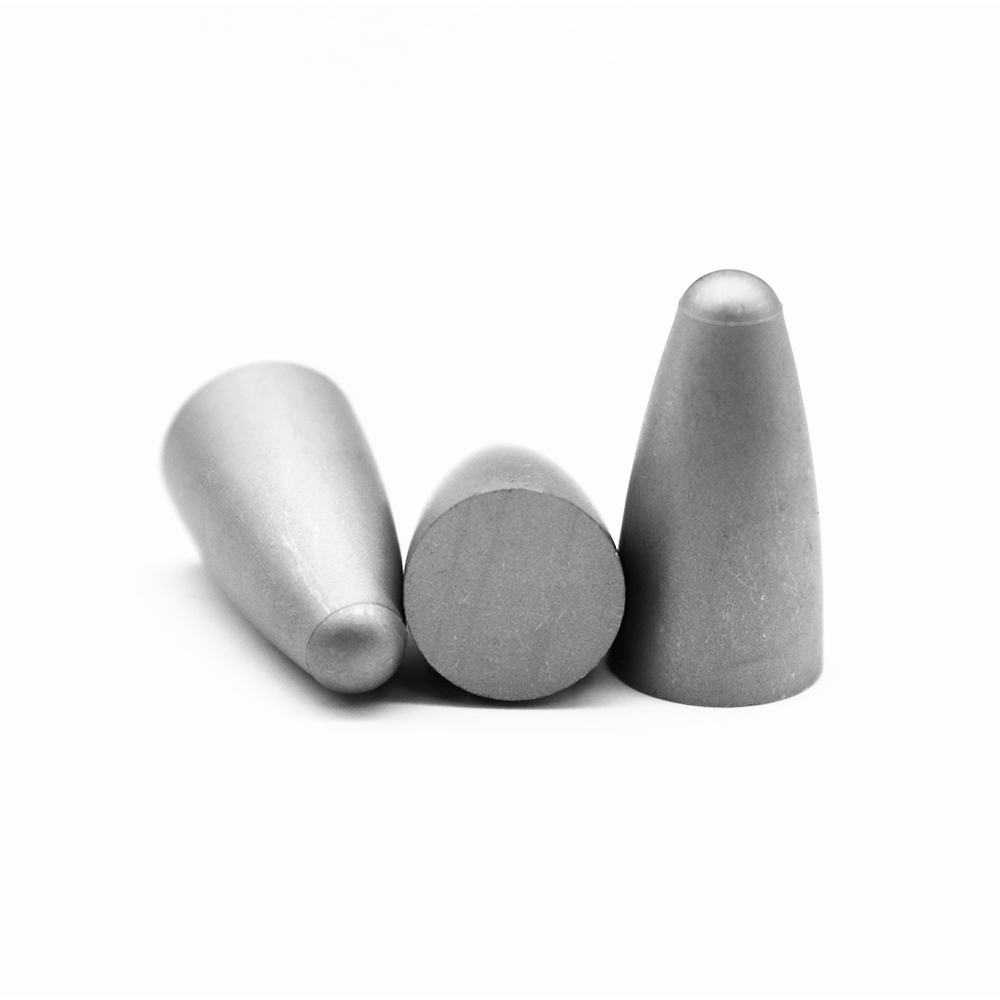
2. Pressing (Compaction): The mixture is pressed into a green compact (a "green" part) using a high-pressure die. This die defines the burr's basic tooth form and profile.
3. Sintering: The green compacts are sintered at high temperatures (approx. 1400°C) in a controlled atmosphere (e.g., vacuum or hydrogen). The Cobalt binder melts, fusing the Tungsten Carbide particles together. The part shrinks significantly and achieves its final hardness and density.
4. Post-Sintering Processing:
Welding: For non-solid carbide burrs, the sintered carbide head is brazed (e.g., high-frequency welded) onto a steel shank.
Edge Preparation: The sintered cutting edges are not sharp. They undergo blasting or a light tumbling to remove minor flaws and create a small, uniform edge hone.
4. Key Characteristics
- Advantages: Cost-effective for high-volume production.
- Disadvantages: Lower geometric accuracy and consistency; less sharp cutting edges limit performance.
Method 2: Grind-Forming Process (The Premium Standard)
This is the core method for manufacturing high-precision, high-performance solid carbide rotary burrs. It involves sintering a blank and then precision-grinding all geometric features.
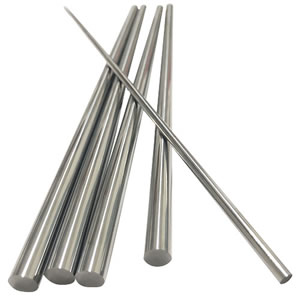
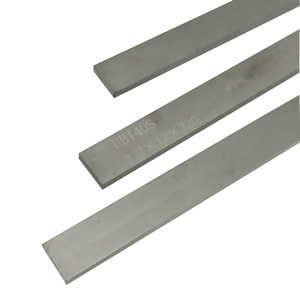
1. Carbide Blank Preparation: Tungsten carbide rod blanks of specific grade, diameter, and length are first created via powder metallurgy (pre-sintered to full hardness).
2. Cylindrical Grinding: The blank is ground on a precision cylindrical grinder to ensure exact diameter, concentricity, and a perfect baseline for the shank and head.
3. CNC Tool Grinding (The Core Process): This is the most critical step, performed on multi-axis CNC tool grinding machines. Using specialized wheels (e.g., diamond wheels), the machine follows a CNC program to progressively create the burr's complex geometry.
Flute Grinding: Grinds the chip flutes and spirals, which determine chip evacuation and cutting efficiency.
Tooth Profile Grinding: Precisely grinds the shape, rake angle, and clearance angle of each individual tooth. A sharp, positive rake angle design significantly reduces cutting forces.
Contour Profiling: Grinds the specific head shapes such as ball, oval, or inverted cone.
4. Edge Honing (Micro-Blunting): The sharp ground edges undergo a controlled micro-blunting process to create a tiny, uniform radius. This step is crucial as it:
- Removes microscopic grinding flaws, increasing edge strength.
- Prevents chipping and extends tool life.
- Ensures more stable cutting and improves surface finish on the workpiece.
5. Post-Processing and Surface Treatment
1. Cleaning: Removal of cooling fluids and metallic debris from the grinding process.
2. Quality Inspection:
Dimensional Accuracy: Checked using optical projectors or Coordinate Measuring Machines (CMM).
Dynamic Balance Testing: Essential for high-speed applications. Burrs are balanced to ensure smooth operation and minimize vibration.
3. Surface Treatment (Optional):
- Blasting: Improves aesthetics and creates a matte surface.
- Coating: Applying a micron-thick, ultra-hard coating can dramatically enhance performance.
- Diamond Coating: Ideal for machining abrasive non-ferrous materials like graphite, carbon fiber, and high-silicon aluminum.
- PVD Coatings (TiN, TiAlN): Used for steel and cast iron, these coatings increase wear resistance, heat resistance, and tool life.