

The Manufacturing Process of Tungsten Carbide Grinding Quills: From Powder to Precision Tool

The Manufacturing Process of Tungsten Carbide Grinding Quills: From Powder to Precision Tool

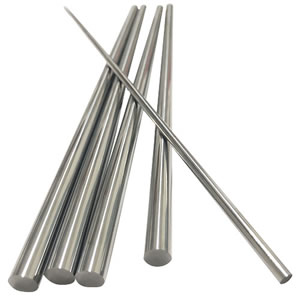
Tungsten carbide grinding quills are critical tools in the field of high-precision grinding, and their exceptional performance stems from exquisite manufacturing processes. The journey from micron-level powder to precision tool involves a series of meticulously controlled Process.
Raw Material Proportioning and Mixing
Manufacturing begins with carefully selected tungsten carbide powder and cobalt powder. Cobalt acts as the binder phase, and its content directly affects the final product's hardness and toughness. Typically, the cobalt content ranges from 6% to 12%, precisely proportioned according to specific application requirements. These micron-level powders are wet-mixed in ball mills to ensure molecular-level uniform distribution.
Forming Process
The mixed slurry is spray-dried into free-flowing granules. Subsequently, precision cold isostatic pressing technology is employed to compress the material at 200-300 MPa pressure. At this stage, the basic geometric shape of the carbide grinding shaft is formed, but the strength remains low, requiring further processing.
Sintering Process
Sintering is the core process of the manufacturing process. In vacuum sintering furnaces, the temperature is precisely controlled above the melting point of cobalt (typically 1400-1500°C). During this phase, the cobalt phase melts and wets the tungsten carbide particles, forming a dense metallurgical bond through liquid phase sintering. Precise control of the heating curve and holding time is essential to ensure complete densification and controlled grain growth.
Precision Machining
The sintered blank carbide grinding bar enters the precision machining stage, which is crucial for ensuring the grinding quill meets usage requirements. Benchmark machining is first performed using ultra-precision cylindrical grinders with diamond grinding wheels to establish an accurate reference axis, with dimensional tolerances controlled within ±0.01 mm.
Key precision grinding processes include:
1. Tool shank processing: Using high precision grinders with diamond wheels, involving rough grinding, semi-finishing, and finishing. Rough grinding removes excess material, semi-finishing achieves dimensional requirements, and finishing ensures surface roughness Ra ≤ 0.2 μm. Taper angle tolerances for HSK, CAPTO, and other interfaces must be within ±30”.
2. Coolant hole processing: Using deep hole drilling equipment with gun drilling technology. To ensure hole wall quality, feed speed (typically 50-100 mm/min) and coolant pressure (10-15 MPa) must be precisely controlled. Hole diameter accuracy must reach H7 grade, with straightness error not exceeding 0.02/100 mm.
3. Dynamic balancing: Using specialized balancing machines to adjust mass distribution by symmetrically removing material. Requirements include achieving G2.5 balance grade with residual unbalance less than 1 g·mm/kg at maximum operating speed.
Quality Inspection
Final inspection involves coordinate measuring machines for geometric dimensions, laser interferometers for form and position tolerances, balancing machines for dynamic balance testing, and metallurgical microscopes for material structure analysis. Only products passing all stringent tests can be delivered.
The entire manufacturing process integrates multiple technologies including powder metallurgy, precision machining, and heat treatment. Precise control at each stage collectively contributes to the exceptional performance of tungsten carbide grinding quills. Particularly in the precision machining phase, comprehensive application of ultra-hard tool technology, precision measurement technology, and automated control technology ensures micron-level manufacturing accuracy.
Zhuzhou Better Tungsten Carbide Company can provide high quality, accuracy tungsten carbide grind quills. Wait for your contact.