

Social Environment of CBN Inserts: Trends and Future Outlook

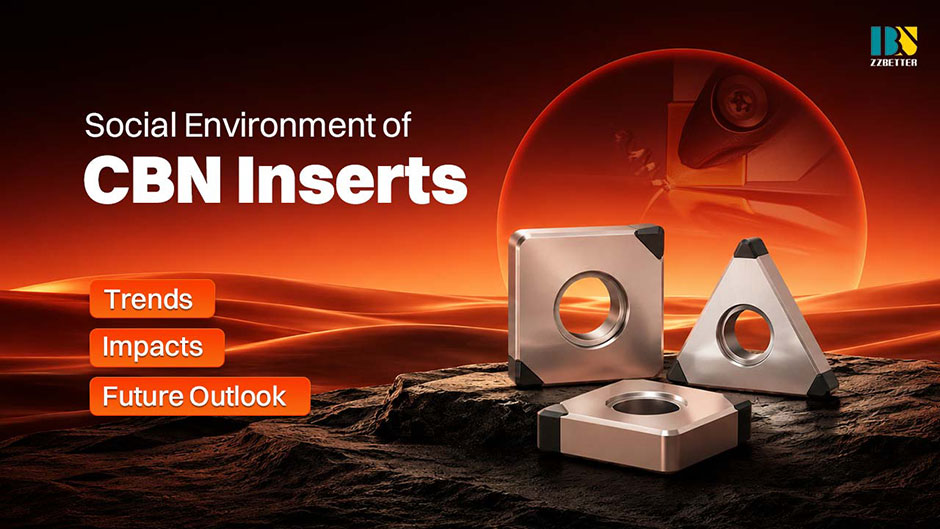
The social environment of Cubic Boron Nitride (CBN) Inserts is shaped by global manufacturing trends, policy frameworks, sustainability demands, supply chain dynamics, and technological innovation ecosystems. As a critical component in high-precision machining, CBN Inserts are deeply integrated into the social and economic landscape. This article explores these key factors and their impact on the industry’s trajectory.
1. The Global Drive for Advanced Manufacturing: A Catalyst for CBN Inserts Adoption
The global shift toward advanced manufacturing (e.g., Industry 4.0, smart factories) is a key driver for CBN Inserts adoption. Driven by demands for higher quality, efficiency, and competitiveness, developed economies (Europe, North America, Japan) invest heavily in manufacturing upgrades. For example, the EU’s “Industrial Strategy for Europe” highlights advanced manufacturing, with CBN Inserts playing a pivotal role in machining critical components for automotive, aerospace, and medical industries.
Emerging economies (China, India, Southeast Asia) also drive demand via rapid industrialization and policies promoting advanced manufacturing to upgrade global value chains. China’s “Made in China 2025” (integrated into broader policies) prioritizes high-end cutting tools like CBN Inserts. This global focus on advanced manufacturing creates a favorable context for CBN Inserts, as they enable higher accuracy, longer tool life, and lower costs.
2. Regulatory Landscapes: Safety, Quality, and Trade Policies Shaping Market Access
Regulatory frameworks on safety, quality, and trade significantly impact CBN Inserts. Global standards like ISO 513:2012 ensure insert compatibility and quality, which is critical for market trust, especially in high-risk sectors (aerospace, medical). Compliance is both a legal requirement and a prerequisite for market access.
Trade tensions and protectionism disrupt global supply chains, affecting CBN Inserts production and costs. Tariffs on raw materials (e.g., boron) force manufacturers to adopt regional sourcing. Intellectual property regulations encourage innovation but create entry barriers for small players, balancing quality improvement with operational costs.
3. Sustainability Imperatives: A Growing Social Expectation Driving Innovation
Sustainability is a key driver for CBN Inserts innovation. Growing global awareness of climate change demands tools that reduce energy use, waste, and emissions. CBN Inserts’ wear resistance reduces tool waste, and their ability to enable dry machining eliminates hazardous coolant disposal, addressing major sustainability concerns.
Sustainability regulations (e.g., EU’s REACH) and carbon neutrality goals further promote CBN Inserts. Manufacturers highlight their sustainability benefits in CSR initiatives, as end-users increasingly prioritize environmentally responsible suppliers, turning sustainability into a competitive advantage.
4. Supply Chain Resilience and Globalization: Challenges and Adaptations
CBN Inserts rely on global supply chains, vulnerable to geopolitical tensions, pandemics, and demands for transparency. Disruptions (e.g., COVID-19, trade disputes) impact availability and costs.
The industry responds with supply chain diversification, regional production, and digital visibility tools. Ethical sourcing is increasingly important, with stakeholders demanding responsible raw material extraction (e.g., boron mining). This builds long-term trust with customers and stakeholders.
5. Human Capital and Skill Development: A Critical Social Enabler
CBN Inserts adoption depends on skilled labor, but many regions face a manufacturing skills gap due to aging workers and low youth interest. Specialized knowledge of CBN properties and machining parameters is essential for effective use.
Governments, educators, and industry collaborate on training programs for advanced machining, including CBN Inserts. Initiatives to attract youth to manufacturing highlight technological sophistication and sustainability, ensuring a skilled workforce for industry growth.
6. Future Outlook: How the Social Environment Will Shape the CBN Inserts Industry
The social environment of CBN Inserts will evolve with advanced manufacturing, sustainability, supply chain resilience, and human capital trends. Industry 4.0 technologies (AI, IoT) create opportunities for smart CBN Inserts with real-time wear monitoring, improving efficiency.
Sustainability will remain dominant, driving eco-friendly binders, recycling, and dry machining advancements. Supply chain resilience and skills gap addressing will be key priorities, with industry-education collaboration continuing.
In conclusion, CBN Inserts’ social environment is dynamic and interconnected, shaped by global manufacturing, regulations, sustainability, supply chains, and human capital. Their success depends on the industry’s ability to adapt to these evolving factors as the world moves toward advanced, sustainable industrialization.