

Application of Rotary Burr in the Dental Field

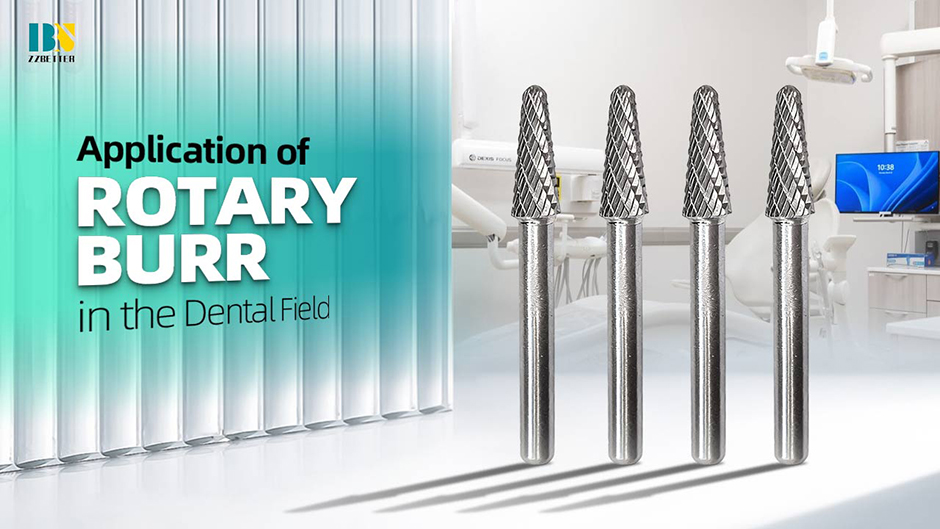
In the microscopic world of dental treatment, rotary burr are quietly changing the future of root canal therapy with their precise manufacturing processes and excellent treatment outcomes.
Whenever a patient lies in the dental chair undergoing root canal treatment, a precise "minimally invasive surgery" is quietly taking place inside the tooth. The protagonist of this procedure is the dental rotary file, with a diameter of less than a millimeter.
This specially designed precision instrument has become an indispensable tool in modern dental medicine. Its technological evolution and expanding applications represent the continuous improvement of dental medical standards.
Dental rotary burr: A Revolutionary Tool in Root Canal Therapy
Dental rotary burr, also known as root canal files, are micro-instruments specifically designed for root canal treatment. Their development has completely transformed traditional dental treatment methods.
In root canal therapy, rotary burr primarily undertake the critical tasks of cleaning, shaping, and preparing the root canal. By removing infected pulp tissue and enlarging the root canal aisle, they create optimal conditions for subsequent disinfection and filling.
Compared to traditional manual instruments, rotary burr offer more precise and efficient operation, significantly reducing the risk of complications during treatment and improving the success rate of procedures.
With advancements in materials science, modern dental rotary burr have evolved from initial stainless steel to today's nickel-titanium alloys, a transition that has substantially enhanced the files' elasticity and fatigue resistance.
Technological Evolution: The Revolution from Stainless Steel to Nickel-Titanium Alloys
The material evolution of dental rotary burr is a history of technological innovation. Early stainless steel rotary burr provided sufficient hardness but lacked elasticity, making them prone to fracture in curved canals.
The introduction of nickel-titanium alloys in the 1990s completely changed this landscape. Nickel-titanium rotary burr possess superelasticity and shape memory effects, enabling them to conform to the complex anatomy of root canals while significantly reducing the risk of instrument separation.
The technological development of modern nickel-titanium rotary burr has undergone multiple stages: from traditional nickel-titanium alloys to M-Wire alloys, and further to controlled memory (CM) nickel-titanium alloys, continuously improving the material's flexibility and fatigue resistance.
The latest fifth-generation nickel-titanium rotary burr incorporate thermal processing and surface treatment technologies, further optimizing the instrument's cutting efficiency and safety, making root canal treatment more predictable.
Clinical Applications: Enabling Precision Treatment
In clinical practice, the application of rotary burr has significantly improved the quality and efficiency of root canal treatment. Different types of rotary burr are designed for specific clinical needs.
Mechanical nickel-titanium rotary file systems are currently the mainstream choice, driven by constant low-speed torque motors to achieve safe and efficient root canal preparation. These systems substantially reduce operator fatigue.
For complex cases such as calcified canals and curved root canals, specialized rotary burr can safely negotiate canal pathways, accomplishing treatment objectives that are challenging with traditional instruments.
In retreatment cases, rotary burr can be used to remove old root canal filling materials, creating conditions for subsequent therapy. rotary burr with different tapers and blade designs can address various clinical challenges.
Market Landscape
The global dental rotary file market shows a steady growth trend.
The main drivers of market growth include: increased demand for dental treatment due to global population aging, improved awareness of root canal treatment, and the expanding availability of dental medical services.
North America and Europe are currently the largest regional markets, boasting well-established oral healthcare systems and high rates of dental treatment. The Asia-Pacific region is considered the fastest-growing market, with rapidly increasing demand in countries like China and India.
Future Outlook: The Development Direction of Intelligence and Personalization
The future development of dental rotary burr will move toward more intelligent and personalized directions. With the popularization of digital dental technology, rotary burr will become more integrated with three-dimensional imaging technology and navigation systems.
The growing adoption of the single-use concept will drive market growth for sterilized packaged rotary burr, minimizing the risk of cross-contamination.
Further developments in materials science will bring forth superior alloy materials, further enhancing the safety and service life of rotary burr. Innovations in surface treatment technology will also improve the cutting efficiency and corrosion resistance of rotary burr.
Under the trend of personalized treatment, customized rotary burr based on patients' specific root canal anatomy may become a reality, truly achieving the deep application of precision medicine in the dental field.
With the continuous accumulation of materials science, manufacturing processes, and clinical experience, dental rotary burr will continue to push root canal treatment technology toward more minimally invasive and precise directions.
In the future, this seemingly tiny instrument will continue to play an irreplaceable key role in maintaining the oral health of billions of people worldwide.