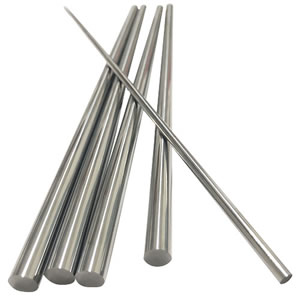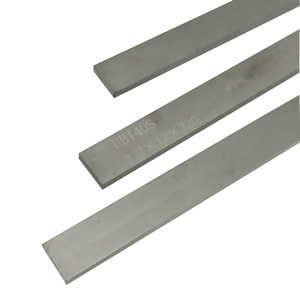


Types and Applications of Cemented Carbide Strips

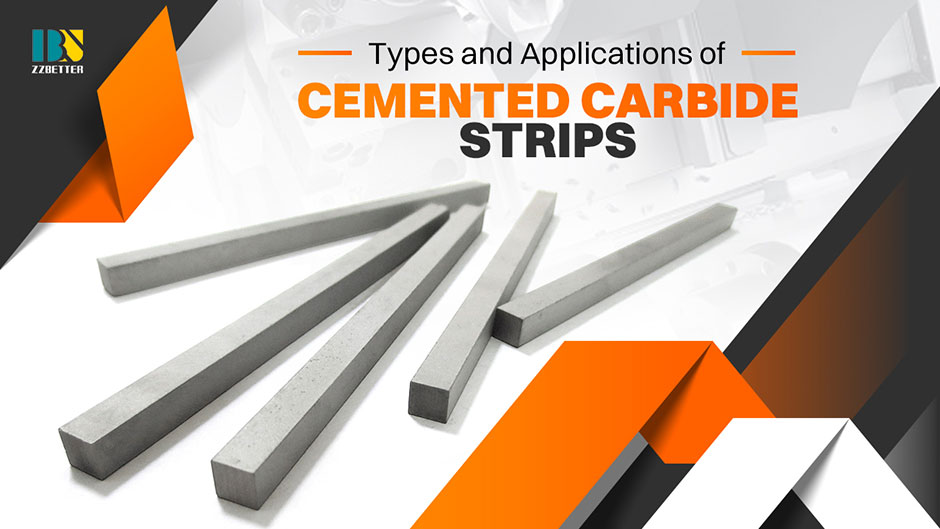
In every corner of modern industry, from deep underground mining to the manufacturing of precision electronic components, there exists a material that supports the limits of production with its exceptional hardness and toughness. This material is the cemented carbide strip, renowned as the "Industrial Teeth" and the "Wear-Resistant Backbone." This article provides an in-depth analysis of the types and extensive applications of this critical material, helping you make the most informed choices for your projects.
I. Main Types: A Scientific Classification by Composition and Properties
Cemented carbide strips are not a single product but a large family. Their classification is fundamentally based on the adjustment of composition and the control of microstructure to meet diverse operational demands.
Tungsten-Cobalt (YG Series) – The Tough Pioneer
Primarily composed of tungsten carbide and cobalt. Its characteristics are excellent toughness and good impact resistance, though its wear resistance is relatively lower. It is highly suitable for processing cast iron, non-ferrous metals (such as copper, aluminum), and non-metallic materials. In the fields of woodworking tools and mining rock drill tools, YG series alloys are highly favored for their outstanding fracture resistance.
Tungsten-Cobalt-Titanium (YT Series) – The Bane of Steel
This type of alloy adds titanium carbide to the YG series base, significantly enhancing its hardness, wear resistance, and red hardness (the ability to retain hardness at high temperatures). This makes the YT series the ideal choice for processing various steels (such as carbon steel, alloy steel). It performs excellently in operations like turning, milling, and drilling, serving as the main force in steel cutting.
General Purpose (YW Series) – The All-Rounder
Born to handle more complex machining environments, the YW series incorporates tantalum carbide or niobium carbide into the YT series. This improvement allows it to combine the toughness of the YG series with the wear resistance of the YT series, earning it the reputation as a "universal alloy." It can effortlessly handle difficult-to-machine steels like stainless steel and high-manganese steel, offering strong versatility.
Ultra-Fine Grain Series – The King of Precision
By controlling the tungsten carbide grain size to the sub-micron level, this type of alloy perfectly balances the contradiction between high hardness and high transverse rupture strength. It is capable of both high-precision machining and withstanding strong impacts. In high-end fields such as machining hardened steel, producing PCB micro-drills, and processing glass fiber composites, it is an irreplaceable choice.
II. Extensive Applications: From Heavy Industry to Micro-Creation
Based on their different characteristics, cemented carbide strips permeate every aspect of industry:
● Cutting Tool Sector: It is the base material for manufacturing CNC tools like turning tools, milling cutters, and drill bits, serving as the "sharp teeth" for the efficient operation of the metal processing industry.
● Wear-Resistant Parts Sector: Used as guide strips, nozzles, seal rings, and rollers, ensuring the long-term stable operation of equipment in harsh abrasive environments and extending service life.
● Mining and Engineering Tool Sector: A key component of rock drill bits, coal cutter picks, and tunnel boring machine tools, conquering the hardest rock layers with its extreme wear resistance.
● Precision Tool Sector: Ultra-fine grain cemented carbide strips are used to manufacture micro-drills, lead frame punch dies, etc., supporting the precision manufacturing of the electronics information industry.
III. How to Choose Correctly?
Selecting the right cemented carbide strip follows a core principle: achieving the optimal balance between hardness/wear resistance and toughness.
For processing cast iron, non-ferrous metals, or high-impact conditions, prioritize toughness with the YG series.
For processing steel where wear resistance is pursued, choose the YT or YW series.
When facing difficult-to-machine materials or pursuing high precision, the Ultra-Fine Grain series is the best choice.
Conclusion
In summary, the world of cemented carbide strips is a science and art of seeking the ultimate balance between "Hardness" and "Toughness." Understanding their types and applications is like possessing the key to selecting the most suitable "tool" for different industrial scenarios. It is crucial for improving production efficiency, reducing costs, and driving technological innovation.