

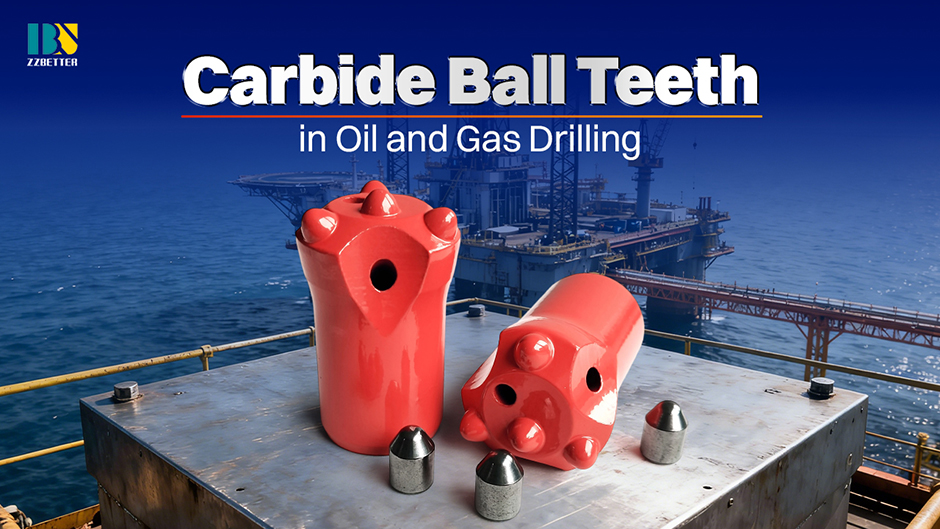
Carbide Ball Teeth in Oil and Gas Drilling

Carbide Ball Teeth in Oil and Gas Drilling
I.Drilling Challenges and the Rise of Carbide Ball Teeth
As oil and gas exploration and development move towards deep and complex formations, drilling engineering faces numerous challenges such as high rock hardness, strong abrasiveness, and long drilling cycles. The emergence and technological iteration of carbide ball teeth, with their outstanding performance, are triggering an efficiency revolution in oil and gas drilling, providing key support for the industry to break through development bottlenecks.
II.Core Advantages: Material and Structural Superiority
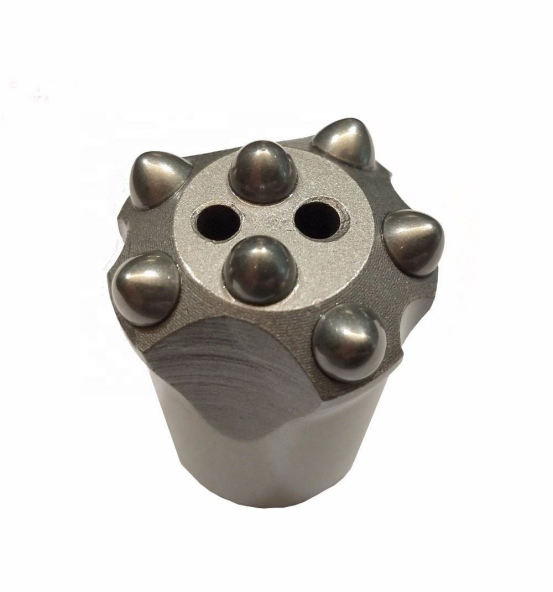
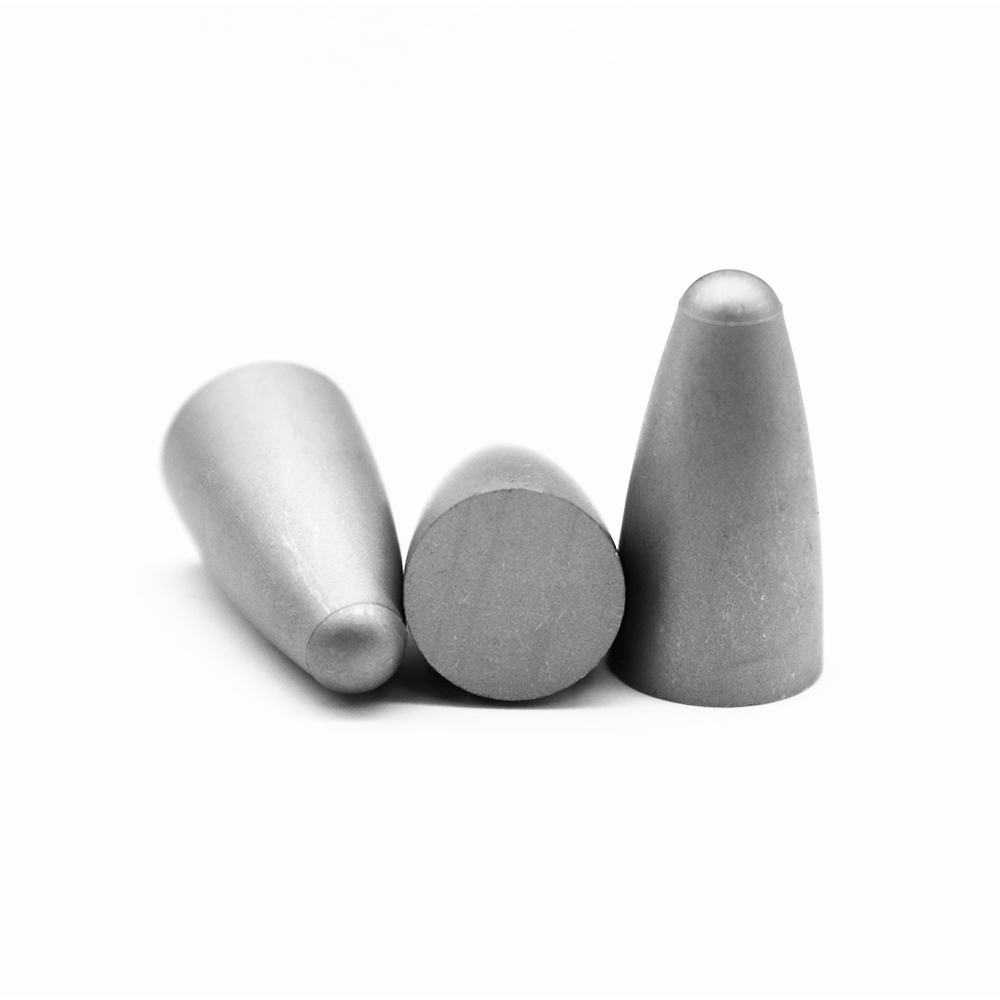
The core advantages of carbide ball teeth stem from their unique material properties and structural design. They are sintered with high-purity tungsten carbide as the matrix and cobalt metal as the binder, possessing both extremely high hardness and excellent toughness. Their hardness can reach above HRC75, and their compressive strength is far superior to traditional drilling tooth materials. The spherical or conical tooth head structure can concentrate drilling pressure on the contact point, achieving "point-to-point" crushing of hard rock formations. Compared with the surface-contact crushing mode of traditional drag bits, the crushing efficiency is increased by more than 30%.
III.Remarkable Leap in Drilling Efficiency
In terms of improving drilling efficiency, carbide ball teeth have shown particularly prominent performance. At the deep shale gas drilling site, PDC bits embedded with carbide ball teeth have increased the rate of penetration from 1.2 meters per hour to 3.5 meters per hour compared with traditional diamond bits, shortening the single-well drilling cycle by more than 40 days. This leap in efficiency not only comes from their powerful crushing capability but also benefits from their wear resistance—in highly abrasive gravel layers, the wear rate of carbide ball teeth is only 1/5 that of traditional alloy teeth, significantly reducing the frequency of tripping to replace bits.
IV.Cost Control and Full Formation Adaptability
Cost control and adaptability expansion are another important dimension of this efficiency revolution. The long service life of carbide ball teeth directly reduces the cost of bit consumption, cutting single-well bit expenses by 25% to 30%. Meanwhile, by adjusting the tungsten carbide grain size and cobalt content, products can be customized to adapt to different formations: fine-grain alloy ball teeth are suitable for hard and brittle formations, while coarse-grain products perform better in plastic formations, achieving full formation adaptability from shallow sandstone to deep volcanic rock.
V.Technological Upgrading for Extreme Environments
As oil and gas development extends to extreme environments such as deep seas and polar regions, the technological upgrading of carbide ball teeth has never stopped. New gradient-structured alloy ball teeth further balance surface hardness and internal toughness through gradient-distributed composition design, demonstrating stronger stability in ultra-deep high-temperature and high-pressure wells. This efficiency revolution led by carbide ball teeth is driving the oil and gas drilling industry to accelerate towards a more efficient, economical, and reliable direction.