

How PDC Cutters Have Become a Key Component in Supporting Resource Extraction

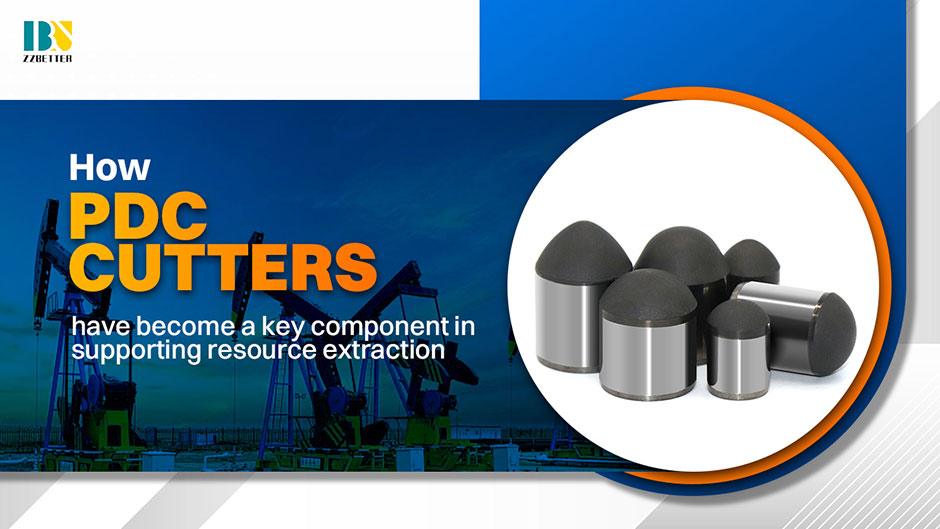
In the continued growth of global resource demand, efficient and stable mining equipment has become crucial for ensuring energy and mineral supplies. Polycrystalline diamond compact (PDC) cutters, with their superior performance, are gradually replacing traditional carbide cutters as a key component in resource extraction. Their core value lies in three key dimensions: technological breakthroughs, application-specific adaptation, and efficiency innovation.
From a technical perspective, PDC cutters have achieved a quantum leap in hardness and wear resistance. Synthesized under high temperature and high pressure from diamond micro powder and a carbide substrate, they inherit the ultra-high hardness of diamond (over HV10,000) while retaining the impact toughness of carbide. This solves the dilemma faced by traditional cutters: high hardness leads to brittleness, while high toughness leads to wear. In deep-shaft mining, PDC cutters, operating in hard rock formations such as granite and basalt, exhibit a wear rate that is only one-fifth that of carbide cutters, extending their service life by 3-5 times. This significantly reduces the frequency of component replacements underground and mitigates the risk of mining interruptions. In terms of adaptability, the versatility of PDC cutters meets the diverse needs of resource extraction. In oil and gas drilling, their sharp cutting edges rapidly crush rock formations. Customized tooth profiles (such as wedge and spoon shapes) adapt to different wellbore trajectories, increasing drilling efficiency in horizontal and directional wells by over 40%. In coal mining, impact-resistant PDC cutters withstand the intense impact of coal seam inclusions, preventing tooth fracture and ensuring continuous operation of fully mechanized mining equipment. In metal mining, PDC cutters with corrosion-resistant coatings resist erosion from acidic mining water, making them suitable for both open-pit and underground mining in complex geological environments.
From an industry perspective, PDC cutters have directly contributed to cost reduction and efficiency improvement in resource extraction. On the one hand, their long lifespan reduces the cost of purchasing and replacing consumables. For example, in oil drilling, the cost of cutters per well can be reduced by 20%-30%. Furthermore, their efficient cutting performance shortens the mining cycle. For example, after adopting PDC cutters, a large coal mine increased its shearer's daily footage from 80 meters to 120 meters, increasing annual production capacity by 15%. Furthermore, the low-wear properties of PDC cutters reduce cuttings generation and ease downhole cleaning efforts, indirectly improving mining safety.
As resource extraction progresses deeper and into more complex formations, the technological evolution of PDC cutters continues to accelerate. In the future, by enhancing high-temperature resistance through nano-coating technology and optimizing the cutter structure through 3D printing, PDC cutters will further overcome performance bottlenecks, providing stronger support for the development of difficult-to-extract resources such as shale gas and deep-sea minerals, and further consolidating their key position in resource extraction.