

How to prolong the life of carbide inserts

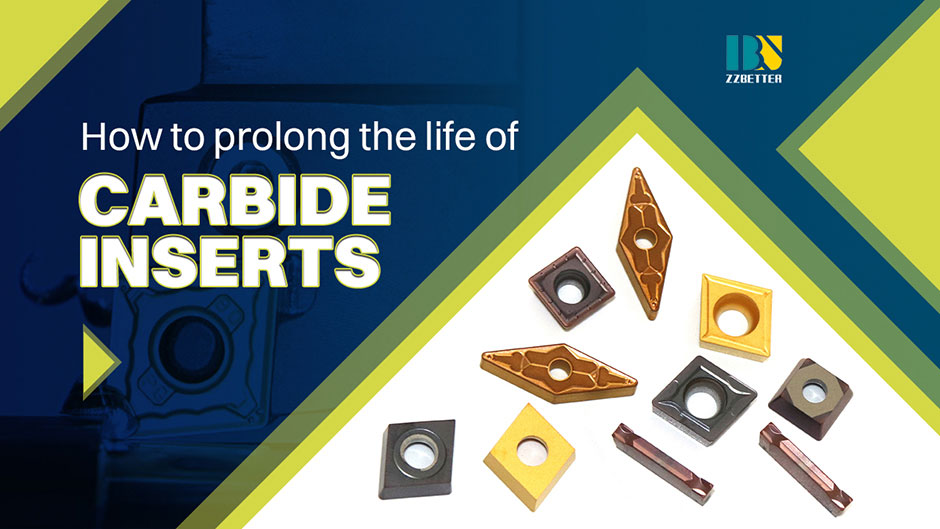
Carbide inserts are essential tools in machining, and prolonging their service life is crucial for reducing production costs and improving work efficiency. Here are several effective ways to achieve this goal.
First, choose the right carbide inserts according to the machining requirements. Different materials (such as steel, cast iron, and non-ferrous metals) and machining processes (turning, milling, drilling) require inserts with specific grades and geometries. For example, when machining high-hardness steel, inserts with high wear resistance should be selected; while for cutting non-ferrous metals with good plasticity, inserts with sharp cutting edges and good chip control are more suitable. Choosing inappropriate inserts will not only affect machining quality but also accelerate wear and shorten their service life.
Second, ensure correct installation and clamping of the inserts. Before installation, clean the contact surfaces of the insert and the tool holder to remove dirt, chips, and other impurities, which can avoid uneven stress on the insert during machining. When clamping, apply the appropriate clamping force—too loose will cause the insert to vibrate, leading to chipping or premature wear, while too tight may damage the insert's structure. Additionally, align the insert accurately with the tool holder to ensure that the cutting edge is in the correct position, preventing abnormal stress on the insert.
Third, optimize the machining parameters. Reasonable setting of cutting speed, feed rate, and cutting depth is vital. Excessively high cutting speed will generate a large amount of heat, accelerating the oxidation and wear of the insert; too low a speed will reduce machining efficiency and may cause built-up edge on the cutting edge, affecting the insert's performance. The feed rate and cutting depth should also be adjusted based on the material of the workpiece and the insert's performance. Generally, a moderate feed rate and cutting depth can balance machining efficiency and insert life.
Fourth, perform regular maintenance and inspection. During the machining process, regularly check the insert's wear condition. If slight wear is found, adjust the machining parameters in time or perform edge grinding (if applicable) to restore its cutting performance. After use, clean the inserts thoroughly to remove residual chips and cutting fluid, which can prevent chemical corrosion or mechanical damage caused by long-term accumulation of impurities.
Finally, store the carbide inserts properly. When not in use, store the inserts in a dry, clean, and vibration-free environment. Use special tool boxes or racks to place the inserts separately, avoiding collision between inserts or with other tools. For inserts that have been used for a long time, apply a thin layer of anti-rust oil to prevent rusting.
By following these methods, the service life of carbide inserts can be significantly prolonged, bringing greater economic benefits to machining enterprises.