

Carbide Rock Drill Bit in Modern Drilling Engineering

Carbide Rock Drill Bit in Modern Drilling Engineering
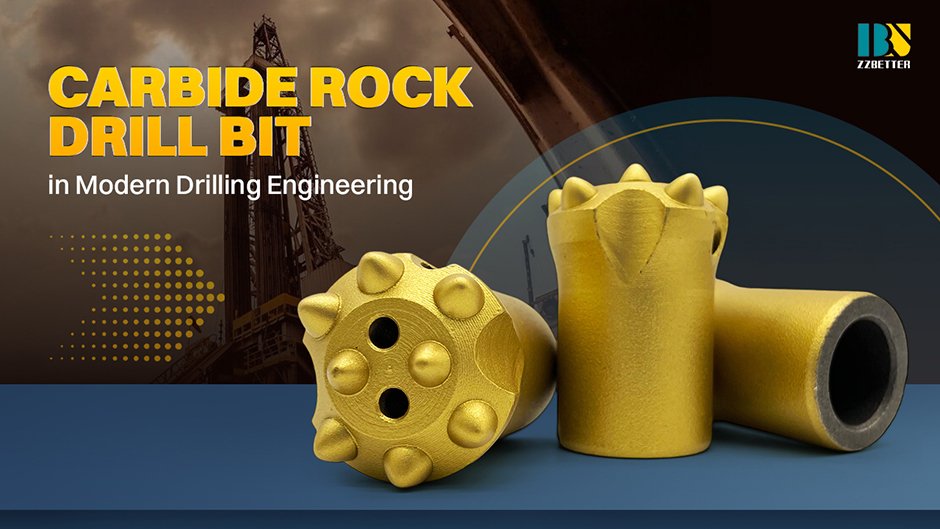
Carbide rock drill bits are indispensable core tools in modern mining development, tunnel excavation, geological exploration, and other fields. They are hailed as the "teeth" of engineering. Their performance directly determines the efficiency, cost, and safety of drilling operations, all of which hinge on the seemingly small yet extremely hard carbide teeth at their tip.
I.Composition and Advantages
Carbide, primarily composed of highly hard and wear-resistant tungsten carbide particles and cobalt powder as a binder, is sintered through powder metallurgy. This composite material perfectly balances extreme hardness with necessary impact resistance, enabling it to withstand the tremendous impact pressure and abrasive wear generated when breaking hard rock. Compared to traditional steel drill bits, its wear life increases by tens of times, significantly reducing the frequency of bit replacements, increasing pure drilling time, and delivering notable comprehensive economic benefits.
II.Structural Design and Classification
The design of carbide drill bits is a profound science. Depending on the type of rock drill and rock formation characteristics, drill bits can be classified into various structures such as cross-shaped, button-shaped, and blade-shaped.
Cross-shaped bits are suitable for various complex rock formations, offering excellent self-sharpening and stability.
Button-shaped bits, characterized by spherical alloy teeth, are ideal for medium-hard to hard rock formations, providing exceptional wear resistance and fast drilling speed.
The design of the bit body is equally critical, including the position and angle of water holes. These ensure that high-pressure water flow effectively removes rock powder, cools the alloy teeth, and reduces regrinding, which is essential for maintaining high efficiency and preventing bit "balling."
III.Challenges and Solutions
However, carbide drill bits also face severe challenges. In extremely complex rock formations, intense impact loads and thermal fatigue can cause alloy teeth to crack, detach, or blunt. Therefore, bit selection is crucial and must be scientifically matched based on the rock's hardness, abrasiveness, and integrity. Simultaneously, optimizing drilling parameters, such as impact force, rotation speed, and feed pressure, is another key factor in protecting the bit and extending its service life.
IV.Future Development Trends
Looking ahead, carbide rock drill bits are evolving toward intelligence and customization.
New materials, such as ultra-coarse-grained carbide and surface coating technologies, further enhance their wear resistance and toughness.
Smart bits integrated with sensors can provide real-time feedback on rock formation information and bit conditions, enabling precise and efficient intelligent drilling.
As a bridge connecting power and rock layers, carbide rock drill bits will continue to pave the way for humanity's advances into the depths of the Earth with their indestructible strength.