

Fusion Welding: The Main Force of Industrial Welding

Fusion Welding: The Main Force of Industrial Welding
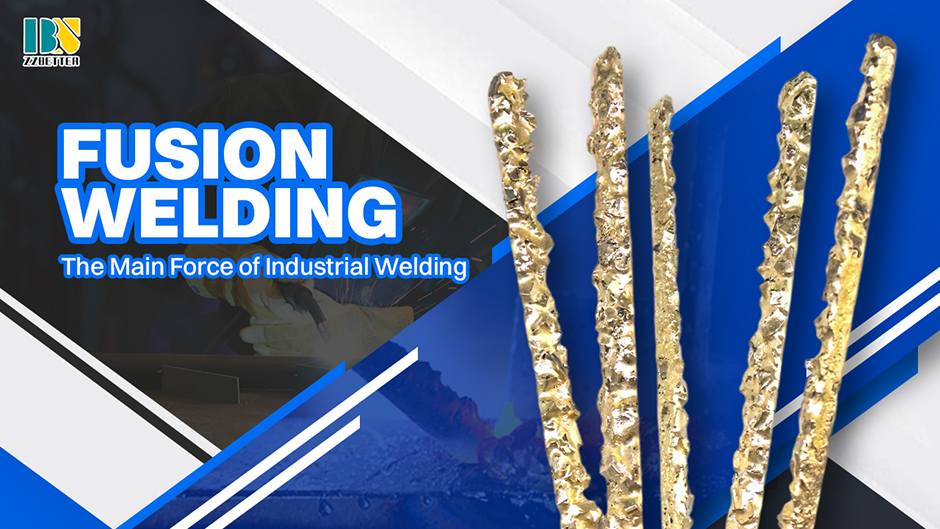
Fusion welding is the most widely used welding category. With the advantages of being able to join thick plates and having high weld strength, it has become a core technology in fields such as steel structures, pressure vessels, and shipbuilding. It includes various methods such as shielded metal arc welding (SMAW), gas metal arc welding (GMAW), and laser welding, among which the first two are "commonly used types" in industrial production and maintenance.
(I) Shielded Metal Arc Welding (SMAW): The Flexible and Convenient "All-Rounder"
Shielded metal arc welding (SMAW) is the most basic and flexible welding method. It melts metals through the arc heat between the electrode and the workpiece. With simple equipment and low operational thresholds, it is especially suitable for on-site maintenance, single-piece/small-batch production, and welding of complex structures.
1. Core Principle and Equipment Composition
Principle: The coating at the front end of the electrode burns to form a protective gas, isolating air. The arc heat melts the electrode core and the workpiece to form a molten pool. After cooling, the residue of the coating forms slag to protect the weld metal.
Equipment: AC or DC arc welding machine, welding electrode holder, welding electrodes (selected according to the base metal; e.g., E4303 electrodes are commonly used for low-carbon steel), and protective equipment (welding helmet, insulated gloves, welding clothing).
2. Key Operational Points
Pre-Welding Preparation: Electrodes need to be dried according to requirements (150-200°C for acidic electrodes, 350-400°C for basic electrodes). Remove oil, rust, and oxide scale from the workpiece surface to avoid porosity; adjust the current according to the plate thickness, generally following the principle of "10-15A per mm of plate thickness" (e.g., 60-90A for 6mm thick steel plates).
Welding Process: Ignite the arc using the "scratching method" (similar to striking a match) or "touch method" (direct impact of the electrode on the workpiece). Control the arc length at 10-15mm (approximately 0.8-1.2 times the electrode diameter); maintain an angle of 60-80° between the electrode and the workpiece, and move at a uniform speed along the welding direction. Control the size of the molten pool to 1.5-2 times the electrode diameter to avoid weld reinforcement caused by an excessively large molten pool or lack of fusion due to an excessively small molten pool.
Post-Welding Treatment: After cooling, use a slag hammer to clean the slag. Inspect the weld surface for defects such as porosity, undercut, and slag inclusion. Conduct non-destructive testing if necessary.
3. Typical Applications and Limitations
Application Scenarios: Construction steel structures, pipeline maintenance, mechanical part welding, bridge construction, etc., especially suitable for outdoor scenarios or those without fixed power supplies.
Limitations: Low welding efficiency (manual operation), weld quality is greatly affected by the operator's skills, and it is not suitable for easily oxidized materials such as aluminum alloys and stainless steels.