

How to Choose Carbide Sleeves

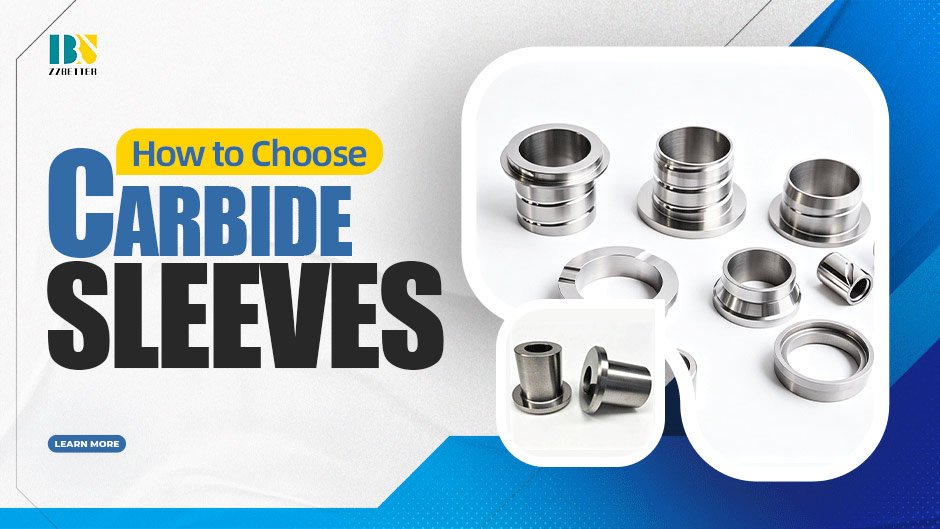 Carbide sleeves are critical components widely used in machinery, automotive, aerospace, and precision manufacturing industries, thanks to their excellent wear resistance, high hardness, and superior stability. Choosing the right carbide sleeve directly affects equipment performance, production efficiency, and operational costs. Below is a comprehensive guide to help you make an informed selection.
First, clarify the application requirements. This is the foundational step for accurate selection. You need to clearly define the core working conditions of the sleeve: the type of load it will bear (whether static load from fixed components or dynamic load from continuous movement), the specific operating speed (especially critical for high-speed rotating mechanisms), the ambient temperature range during operation, and the type of medium it will contact (such as lubricating oil, cooling water, or harsh corrosive chemicals). For high-speed rotating scenarios, such as in precision bearings or spindle assemblies, prioritize sleeves with high dimensional accuracy (preferably reaching IT3-IT5 tolerance levels) and a smooth surface finish (Ra ≤ 0.2 μm) to effectively reduce friction, minimize wear, and extend the service life of matching components. In high-temperature (exceeding 600°C) or corrosive environments, it is essential to select carbide grades with strong oxidation and corrosion resistance, such as those reinforced with tantalum or niobium, which can maintain structural stability under extreme conditions.
Second, select the appropriate carbide grade. The performance of carbide sleeves largely depends on the carbide grade. Tungsten carbide-cobalt (WC-Co) grades are the most common: higher cobalt content enhances toughness, suitable for impact-loaded applications; lower cobalt content improves hardness and wear resistance, ideal for high-abrasion tasks. For special requirements like high-temperature resistance, consider titanium carbide (TiC) or tantalum carbide (TaC) reinforced grades.
Third, pay attention to dimensional accuracy and tolerance. Carbide sleeves are often used in precision fits, so their inner diameter, outer diameter, and length tolerances must match the assembly requirements. Check the manufacturer’s specifications for concentricity and straightness, which are crucial for avoiding vibration and ensuring smooth operation.
Finally, evaluate the manufacturer’s reliability comprehensively. A reputable supplier is a guarantee of product quality. When selecting, prioritize manufacturers with a proven track record in producing high-quality carbide components, who can not only provide detailed product technical parameters but also offer professional technical support and perfect after-sales service. It is also necessary to verify the material certification documents of the carbide sleeves, such as ISO 9001 quality system certification and material composition test reports, to ensure that the products comply with relevant industry standards. This not only guarantees the durability and performance consistency of the sleeves but also helps avoid potential production disruptions caused by substandard components.