

How to Choose the Right Carbide Gun Drill

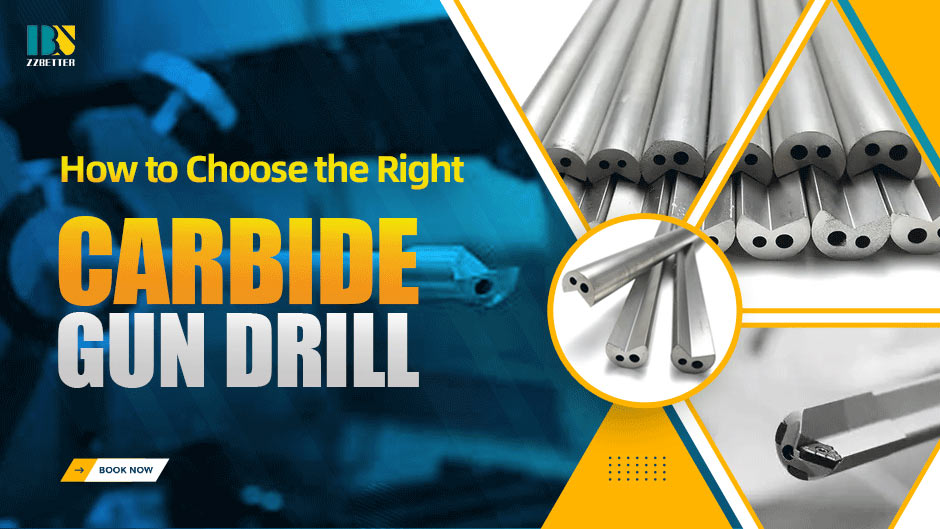
Carbide gun drills are essential tools for high-quality deep hole drilling. Selecting the correct one can significantly enhance machining efficiency, improve hole wall finish, extend tool life, and reduce overall production costs. Faced with numerous options on the market, you can follow these clear steps to find the gun drill best suited to your specific needs.
Step 1: Identify the Workpiece Material
This is the foundation for selecting a gun drill. The properties of the material directly determine the required carbide grade, flute design, and cutting parameters. For instance, gun drills used for machining common carbon steel or aluminum alloys differ significantly from those used for heat-resistant superalloys or titanium in terms of material toughness, rake angle, and chip flute geometry. Always provide accurate material information to your supplier.
Step 2: Confirm the Hole Diameter and Depth
A gun drill is specified by its diameter and effective drilling length. You need to determine the required hole diameter (which matches the drill diameter) and the hole depth. Gun drills are relatively low-rigidity tools, and their length-to-diameter ratio directly affects machining stability and precision. When selecting, ensure the drill's effective length meets your depth requirement but avoid excessive length, which can cause unnecessary vibration and increased cost.
Step 3: Evaluate Your Machine Tool and Coolant System
Gun drilling has specific requirements for machine tools and coolant. It requires a high-pressure, high-flow coolant system to ensure efficient chip evacuation and cooling. Before selection, verify that your machine's coolant pressure (typically 50-150 bar or higher) and filtration system meet the standards. Additionally, the stability and speed range of the machine spindle should match the gun drill's recommended parameters.
Step 4: Select the Appropriate Coating
Modern gun drills are often equipped with Physical Vapor Deposition (PVD) coatings to dramatically improve performance. Common coatings like Titanium Nitride (TiN) or Titanium Aluminum Nitride (TiAlN) effectively reduce friction and enhance wear and heat resistance. Different materials have corresponding optimal coatings. For example, machining steel commonly uses versatile coatings, while machining non-ferrous or sticky materials may require specialized low-friction coatings. Your supplier's professional advice is crucial at this stage.
Step 5: Assess the Supplier's Technical Support and Service
Choosing a gun drill is not just purchasing a product; it's acquiring a solution. A qualified supplier should not only provide products that meet specifications but also offer detailed cutting parameter recommendations, operational training, and prompt technical support. Especially during initial application or when encountering machining challenges, the supplier's engineering support capability is key to ensuring your successful production.
In summary, selecting a carbide gun drill is a systematic decision-making process. By clarifying your machining requirements and engaging in thorough communication with a professional supplier, you can undoubtedly find the right "tool" to boost your production efficiency and quality.