

Choosing Tungsten Carbide Rods for Your Project

Choosing Tungsten carbide rods for Your Project
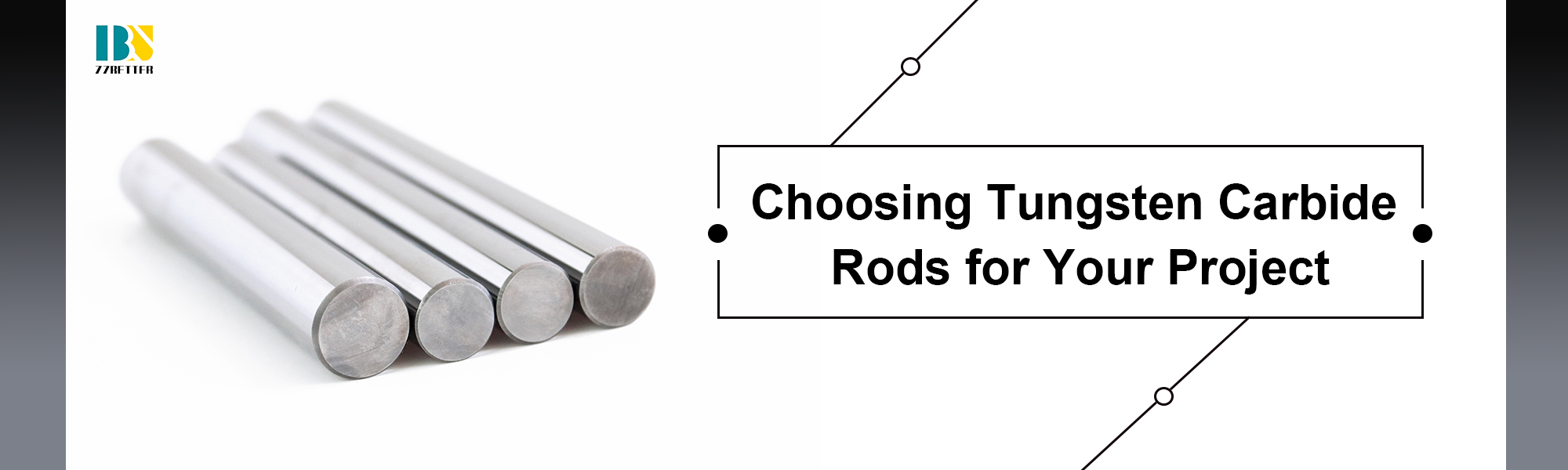
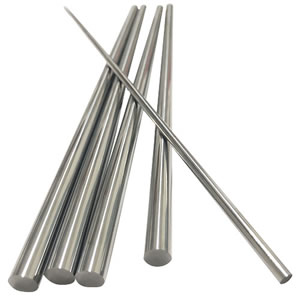
Tungsten carbide rods, also known as cemented carbide rods, are essential components in the manufacturing of cutting tools due to their exceptional hardness and wear resistance, ranking just behind diamond. These rods outperform stainless steel in cutting performance and have a significantly longer service life. However, with various grades available, selecting the right tungsten carbide rod for your project requires careful consideration.
Composition of Tungsten Carbide Rods
Cemented carbide typically consists of tungsten carbide (WC) combined with cobalt as a metal binder. Other materials like titanium carbide (TiC) or tantalum carbide (TaC) may also be included. The specific composition can be likened to a recipe; by adjusting the proportions of these ingredients—particularly cobalt—different grades of tungsten carbide can be produced. For example:
✅K10 Grade: Contains 6% cobalt
✅K20 Grade: Contains 8% cobalt
✅K30 Grade: Contains 10% cobalt
Key Properties: Hardness and Transverse Rupture Strength
Two critical factors in determining the quality of tungsten carbide rods are Hardness (HRA) and Transverse Rupture Strength (TRS).
✅Higher HRA indicates greater wear resistance.
✅Higher TRS means the material is less likely to break under stress.
Typically, increasing cobalt content enhances strength but reduces hardness. For instance:
✅Grade KFF05: Cobalt 5.5%, HRA 92.2, TRS 310 MPa
✅Grade KF24: Cobalt 6.0%, HRA 91.9, TRS 325 MPa
Balancing Hardness and Strength
Achieving a balance between hardness and strength is possible by manipulating the grain size of tungsten carbide. Smaller grain sizes can enhance both properties. For example:
✅Grade KFF05: Cobalt 5.5%, Fine grain, HRA 92.2, TRS 310 MPa
✅Grade KFS06: Cobalt 6.0%, Submicron grain, HRA 93.3, TRS 500 MPa
Adding TaC or other materials during the sintering process can help control grain growth, although this may increase costs.
Selecting the Right Grade for Your Application
The choice of tungsten carbide rod primarily depends on the materials you will be machining. For example:
Grade | Cobalt % | Grain Sizes μm | Density g/cm³ | Hardness HRA | TRS Mpa |
YG6 | 6 | 0.4 | 14.85 | 94 | 3800 |
YG8 | 8 | 0.4 | 14.65 | 93.6 | 4000 |
YG9 | 9 | 0.2 | 14.25 | 94 | 4200 |
YG10 | 10 | 0.6 | 14.4 | 92 | 4100 |
YG12 | 12 | 0.4 | 14.25 | 92.5 | 4200 |
YG15 | 15 | 0.7 | 14 | 89 | 4500 |
✅YG6: Suitable for machining aluminum and magnesium alloys, fiberglass, and hard plastics. Recommended for small diameter cutters and drills.
✅YG8: Ideal for machining resin materials, wood, titanium alloys, stainless steel, and copper-aluminum alloys. Best for high-speed drills and milling cutters.
✅YG9: Exhibits extreme wear resistance and toughness, suitable for finishing hardened steel and achieving high-precision finishes.
✅YG10: Versatile for general roughing, semi-finishing, and finishing of mold steel, gray cast iron, and heat-resistant alloys. Recommended for drill bits and cutters.
✅YG12: Offers good wear resistance and toughness, suitable for semi-finishing and finishing machining of stainless steel and titanium alloys.
✅YG15: Provides good wear resistance and excellent toughness, ideal for manufacturing integrated stamping molds and impact-resistant tool holders.
Conclusion
Choosing the right tungsten carbide rods is crucial for the success of your cutting tool projects. By understanding the composition, key properties, and specific applications of various grades, you can make informed decisions that enhance the performance and durability of your tools. For further information, consider consulting with manufacturers or reviewing technical catalogs to find the best options for your needs.