

Latest Innovations in Tungsten Carbide Rods

Latest Innovations in Tungsten carbide rods

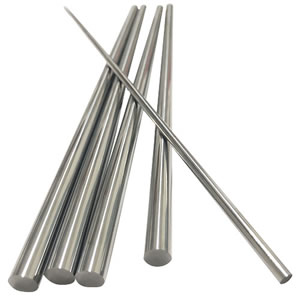
Tungsten carbide rods are foundational components in the manufacturing of cutting tools, and recent innovations in this area have significantly enhanced their performance and application versatility. This article explores the latest advancements in tungsten carbide rods, focusing on new technologies and methodologies that are shaping the future of cutting tools.
1. Advanced Sintering Techniques
One of the most significant innovations in tungsten carbide rod production is the development of advanced sintering techniques. Traditional sintering methods can lead to inconsistencies in grain size and density, impacting the final product's performance. Recent advancements include:
✅Hot Isostatic Pressing (HIP): This technique applies high pressure and temperature simultaneously, resulting in a denser and more uniform carbide structure. HIP-treated rods exhibit improved mechanical properties, including higher toughness and wear resistance.
✅Field-Assisted Sintering Technology (FAST): Also known as spark plasma sintering, FAST accelerates the sintering process, allowing for finer grain control. This method produces tungsten carbide rods with superior hardness and strength, suitable for high-performance applications.
2. Nano-Structured Carbide Materials
The introduction of nano-structured carbide materials represents a revolutionary shift in tungsten carbide technology. By incorporating nano-sized particles into the tungsten carbide matrix, manufacturers can achieve:
✅Enhanced Hardness: Nano-structured rods demonstrate increased hardness due to the refined microstructure, which impedes crack propagation and improves wear resistance.
✅Improved Toughness: The finer grain size contributes to better toughness, allowing the rods to withstand higher impact loads without fracturing.
These innovations make nano-structured tungsten carbide rods ideal for demanding applications, such as aerospace and automotive machining.
3. Tailored Coating Technologies
Innovative coating technologies have also emerged, enhancing the performance of tungsten carbide rods. These coatings provide additional benefits, including improved wear resistance and reduced friction. Key developments include:
✅Multi-Layer Coatings: Applying multiple layers of coatings, such as titanium nitride (TiN) or aluminum oxide (Al2O3), creates a protective barrier that increases tool life and performance. These coatings can be tailored to specific applications, optimizing the rods for various materials being machined.
✅Functionally Graded Coatings: These coatings vary in composition and properties along the length of the rod, allowing for enhanced performance in different cutting conditions. For example, the tip may have a harder coating for cutting, while the body is designed for toughness.
4. Enhanced Recycling Methods
As environmental concerns grow, the tungsten carbide industry has made strides in developing sustainable practices. Innovations in recycling tungsten carbide rods focus on:
✅Efficient Recycling Processes: New methods for reclaiming tungsten carbide from worn tools have been developed, allowing for the recovery of up to 95% of the material. This not only reduces waste but also decreases the demand for raw tungsten, contributing to more sustainable production practices.
✅Recycling Certification: Manufacturers are increasingly obtaining certifications for their recycling processes, ensuring that their practices meet international sustainability standards. This transparency helps customers make informed choices about their tooling suppliers.
5. Customization and Simulation Technologies
The ability to customize tungsten carbide rods for specific applications has improved dramatically due to advancements in simulation technologies.
✅Computer-Aided Design (CAD) and Finite Element Analysis (FEA): These tools allow engineers to design tungsten carbide rods tailored to specific machining conditions before production. By simulating performance, manufacturers can optimize rod geometry, grain size, and coating application, leading to better end products.
✅Additive Manufacturing: The incorporation of additive manufacturing techniques allows for the production of complex geometries that were previously impossible with traditional methods. This flexibility enables manufacturers to create specialized tools that enhance performance in niche applications.
Conclusion
The latest innovations in tungsten carbide rods reflect a concerted effort to improve performance, sustainability, and customization in cutting tool manufacturing. Advanced sintering techniques, nano-structured materials, tailored coatings, enhanced recycling methods, and customization technologies are all contributing to the evolution of tungsten carbide tools. As these innovations continue to develop, they will play a pivotal role in meeting the increasing demands of modern machining applications, ensuring that tungsten carbide remains a critical material in the industry.